What Characterizes Budget Resorts in Aruba?
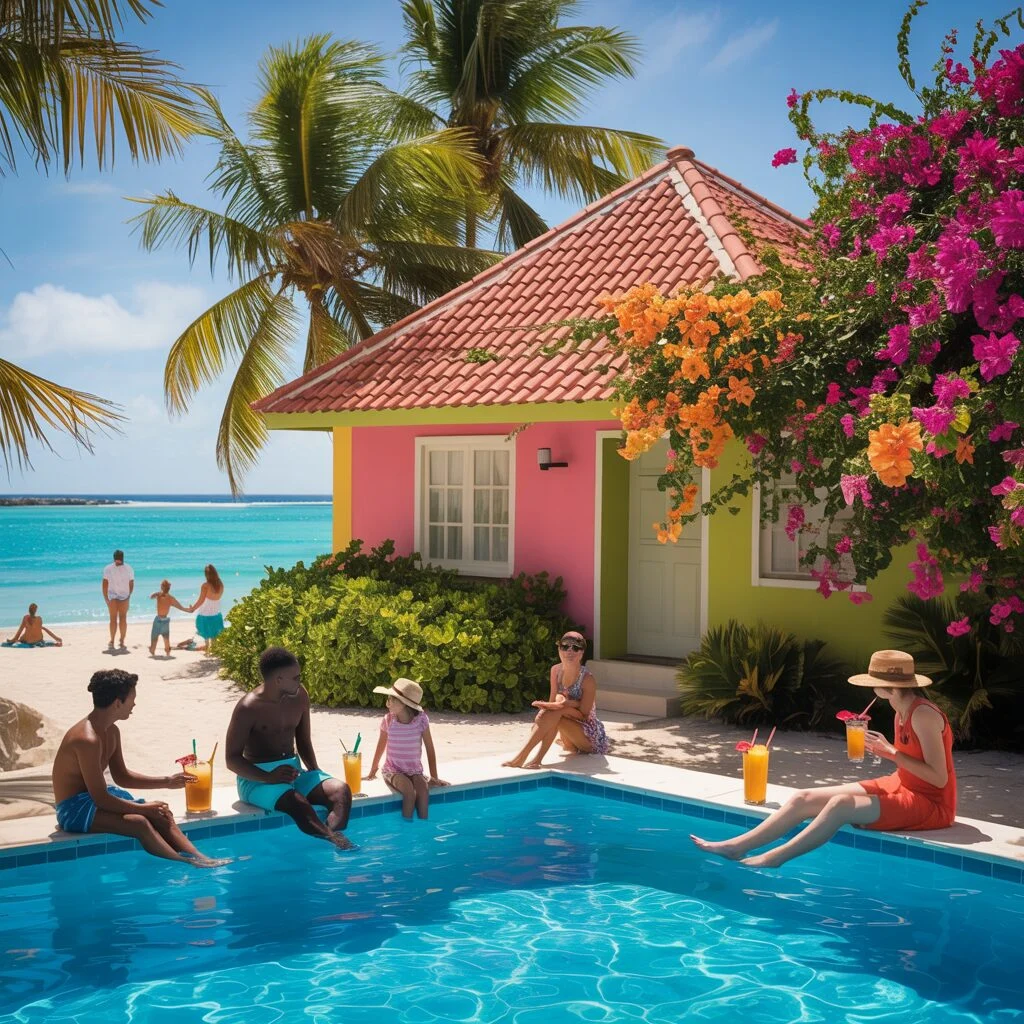
Budget resorts in Aruba cost $100-200 per night and feature older, well-maintained properties with clean rooms, basic AC, and pools. You get functional comfort without marble lobbies or extensive luxury services—these are typically smaller, family-run establishments focused on providing a safe base for island exploration rather than on-property amenities.
These properties prioritize cleanliness and location value over opulence. Expect compact facilities, older wall-mounted AC units instead of central systems, and limited staff availability compared to $300+ luxury resorts.
What Types of Affordable Accommodations Are Available?
Aruba offers three main budget categories: value all-inclusives ($150-200/night), apartment-style units with kitchens ($100-150/night), and inland hotels ($80-120/night). Each serves different traveler needs and budgets.
Value-Focused All-Inclusive Resorts
Value all-inclusives cost $150-200 per night and include buffet dining with rotating themes, local spirits and beers (not top-shelf brands), and poolside entertainment. These properties offer 20-30% savings versus luxury all-inclusives by streamlining services—expect one main restaurant instead of multiple à la carte options.
Booking these packages controls total vacation costs since meals and drinks are prepaid. Entertainment focuses on low-key poolside activities rather than organized animation teams.
Apartment-Style Stays with Kitchen Facilities
Apartment-style resorts cost $100-150 per night and provide 30-50% more square footage than standard hotel rooms. Kitchen facilities let you prepare breakfast and lunch, cutting daily food costs by $30-50 per person.
Typical features include:
- separate living areas with sofa beds,
- fully equipped kitchenettes with stovetops and fridges,
- private balconies or patios.
Off-Beach and Inland Hotel Alternatives
Inland hotels in Noord or Oranjestad cost $80-120 per night—40-50% less than beachfront properties. These locations sacrifice direct beach access but offer newer rooms, quieter environments, and proximity to local supermarkets.
You’ll need a rental car ($30-40/day) or rely on public buses ($2.60 per ride) to reach beaches. The trade-off: modern facilities and authentic local neighborhood experience.
What Are the Cost Expectations for Budget Stays?
Budget stays in Aruba cost $100-200 per night base rate, plus 9.5% government tax, 3% environmental levy, and 10-15% service charges. Total nightly cost typically reaches $130-250 after all fees—still 40-60% less than luxury properties.
Average Pricing for Economy Resorts
Economy resorts range $100-200 per night for decent quality. Properties below $100 are typically hostels or require significant quality compromises. Beachfront budget resorts command $150-200, while inland options cost $100-150.
Expect to pay 50-70% more for beachfront location versus inland properties with identical room quality.
How Seasonal Demand Affects Resort Rates
Rates double during December-April high season. A $120 low-season room costs $200-240 in peak months. Book September-November for lowest rates—30-50% below peak pricing.
| Season | Months | Price Impact |
|---|---|---|
| High Season | Dec – April | Highest Rates (2x low season) |
| Shoulder Season | May – August | Moderate Rates (1.3-1.5x low season) |
| Low Season | Sept – Nov | Lowest Rates (baseline pricing) |
Additional Costs and Resort Fees to Consider
Mandatory fees add 22.5-27.5% to advertised rates: 9.5% government tax, 3% environmental levy, and 10-15% service charges. A $150/night advertised rate becomes $184-191 after fees.
Resort fees ($10-25/day) cover Wi-Fi, pool towels, and parking. Verify total costs before booking to avoid $70-175 in surprise weekly charges.
What Amenities Are Included in Low-Cost Resorts?
Budget resorts include AC, cable TV, mini-fridges, in-room safes, basic toiletries, and swimming pools. You won’t get 24-hour room service, multiple restaurants, extensive spas, or nightly turndown service found at $300+ properties.
Standard Room Features and Comforts
All budget rooms include climate control (older wall-mounted AC units), cable TV with 20-30 international channels, mini-fridges, in-room safes, and basic soap/shampoo. Rooms are 250-350 square feet versus 400-600 in luxury properties.
Typical inclusions:
- cable TV with international channels,
- mini-fridges (essential for keeping drinks cold),
- in-room safes for valuables,
- basic toiletries (soap and shampoo).
Availability of Pools and Recreational Facilities
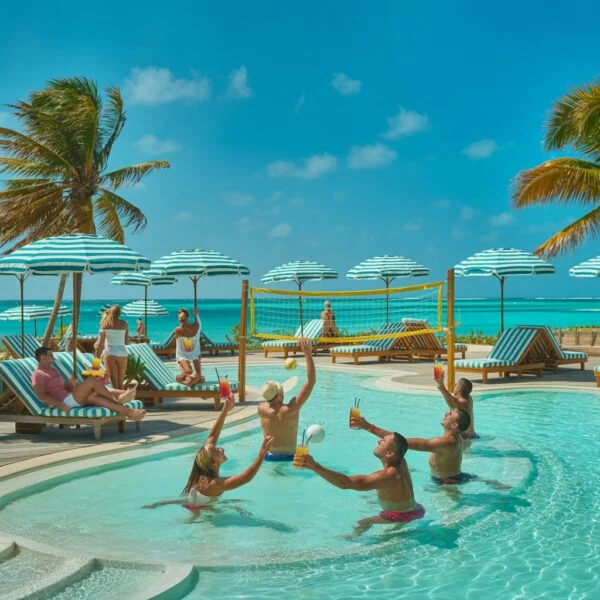
Budget resorts feature one pool (typically 15-25 meters) versus multiple lagoon-style pools at luxury properties. Pools include 20-40 sun loungers—arrive before 9 AM during peak season to secure spots.
Recreational facilities are limited to basic gyms (3-5 machines) or ping-pong tables. No kids’ clubs or organized daily activities—entertainment is self-directed island exploration.
Internet Access and Connectivity Standards
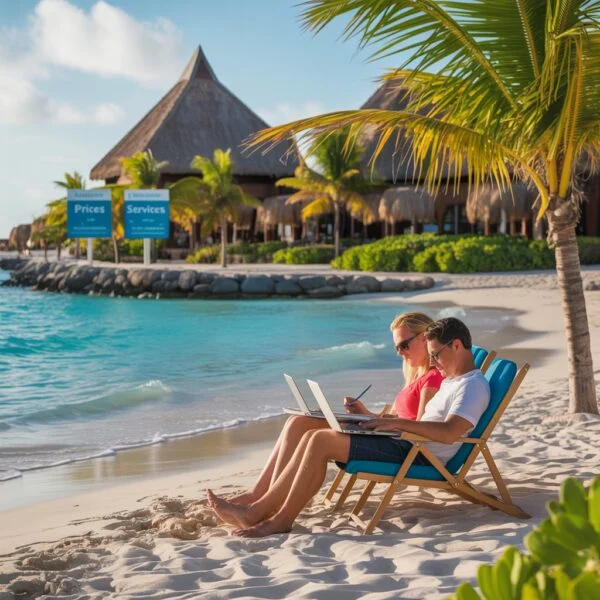
Free Wi-Fi in lobbies and pool areas is standard, but in-room connection costs $5-15/day at 50% of budget properties. Speeds range 5-15 Mbps in public areas versus 1-5 Mbps in rooms.
Check recent reviews for connectivity specifics if remote work requires reliable internet. Older concrete buildings often have dead zones in 30-40% of rooms.
How Location Influences Budget Resort Experiences
Beachfront budget resorts cost $150-200/night and offer 2-5 minute beach walks. Inland properties cost $100-150/night but require 10-20 minute drives or 30-45 minute bus rides to beaches. Location choice impacts daily transportation costs by $10-40.
Pros and Cons of Staying Off the Beach
Inland locations save 30-40% on nightly rates and offer newer rooms, quieter environments, and proximity to local supermarkets (5-10 minute walk). Trade-off: daily beach trips require rental car ($30-40/day) or bus fare ($2.60 per ride, $5.20 round trip).
Calculate break-even: if beach access costs $5.20/day via bus, you save money staying inland for trips 7+ nights. For shorter stays, beachfront budget resorts offer better value.
Access to Beaches and Tourist Attractions
All Aruba beaches are public by law. Budget resorts provide complimentary shuttles to nearest beaches on fixed schedules (typically 9 AM, 11 AM, 2 PM, 5 PM). Public buses (Arubus) run every 30-45 minutes, cost $2.60 per ride, and connect all hotel zones.
Inland locations offer 10-15 minute shorter drives to California Lighthouse and Arikok National Park versus beachfront properties. Central positioning reduces attraction travel time by 20-30%.
Dining and Hospitality Services at Value Resorts
Budget resorts offer one main restaurant or poolside snack bar with international staples (burgers, salads, pasta). On-site meals cost $12-25 per person versus $8-15 at local food trucks and $20-35 at mid-range restaurants.
On-Site Dining vs. Exploring Local Cuisine
On-site dining at budget resorts costs $12-25 per meal with limited menus (10-15 items). Local food trucks offer fresh seafood and Pastechi for $8-15 per meal—40% savings with better variety and cultural experience.
Budget $40-60 daily for off-property dining versus $50-75 for on-site meals. Weekly savings: $70-105 by eating local.
Should You Choose an All-Inclusive Package?
All-inclusive packages add $40-80 per person daily. Break-even requires consuming 4+ alcoholic drinks ($8-12 each) and 3 meals ($12-25 each) daily on property. For travelers spending 6+ hours daily off-property, all-inclusive wastes $200-400 weekly.
Verify inclusions: 60-70% of budget all-inclusives charge extra for premium drinks ($5-8), espresso ($3-5), and specific menu items.
Service Levels and Staff Availability
Budget resorts staff front desks 7 AM-11 PM (versus 24 hours at luxury properties). No bellhops, room service, or nightly turndown. Staff-to-guest ratio: 1:15-20 versus 1:5-8 at luxury resorts.
Communicate arrival times 24-48 hours in advance for after-hours check-in. Tour booking assistance available during business hours only.
Budget vs. Luxury: Managing Travel Expectations
Budget resorts ($100-200/night) offer 60-70% cost savings versus luxury ($300-500/night) by eliminating spa services, multiple restaurants, beach attendants, and 24-hour concierge. You get clean, functional rooms with pools—ideal for travelers spending 8+ hours daily exploring.
Key Differences in Facilities and Services
Luxury resorts feature 3-5 pools, full spas, 4-6 restaurants, and immediate beach service with padded loungers. Budget resorts offer 1 pool, 1 restaurant, and basic beach access. Maintenance response time: 24-48 hours (budget) versus 2-4 hours (luxury).
Room size difference: 250-350 sq ft (budget) versus 400-600 sq ft (luxury). Fixture age: 10-20 years (budget) versus 0-5 years (luxury).
Who Should Choose Budget Resorts?
Budget resorts suit active travelers spending 8+ hours daily off-property on diving, safaris, and island exploration. Ideal for long-term stays (7+ nights), friend groups splitting costs, and families prioritizing activity budgets over accommodation luxury.
They are also excellent for:
- long-term travelers extending their stay,
- groups of friends splitting costs,
- families who prefer spending their budget on activities rather than accommodation.
How to Secure the Best Deals on Aruba Resorts
Book 3-6 months in advance for 15-25% savings versus last-minute rates. Compare prices across 3-5 platforms and check resort direct websites for exclusive 10-15% discounts. Flight+hotel bundles save $100-300 per trip.
Booking Strategies for Budget Travelers
Compare prices on Booking.com, Expedia, Hotels.com, and resort direct websites. Direct bookings offer 10-15% discounts 40% of the time. Flight+hotel bundles disguise room rates and save $100-300 total versus separate bookings.
Flexible dates (±3 days) unlock 20-30% savings. Last-minute bookings (7-14 days out) offer 15-25% discounts during low season but risk 100% sell-out during December-April.
Best Times to Visit for Lower Rates
September-October offers lowest rates—30-50% below December-April peak. A $200 peak-season room costs $100-140 in fall. Trade-off: slightly lower trade winds and 2-3°F higher temperatures.
Avoid Christmas week (Dec 20-Jan 5), New Year’s (Dec 28-Jan 3), and Carnival (late January-early February) when budget rooms reach $250-300/night—matching luxury off-season rates.