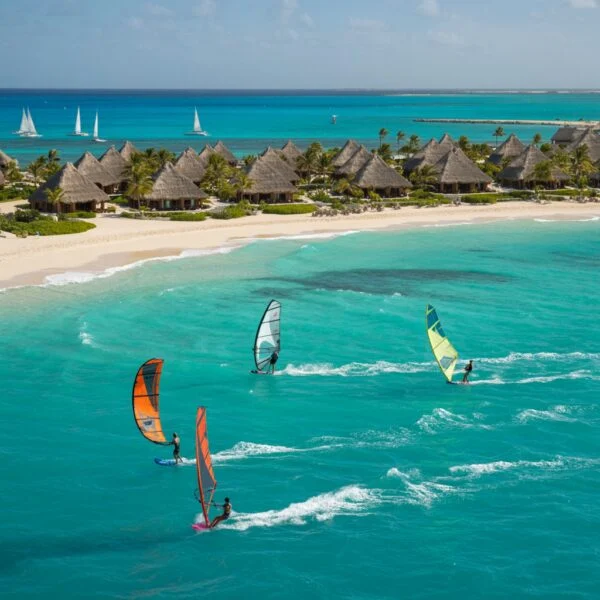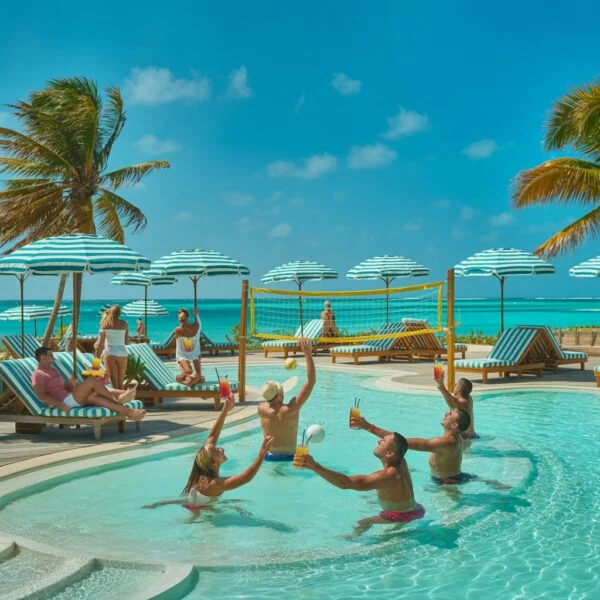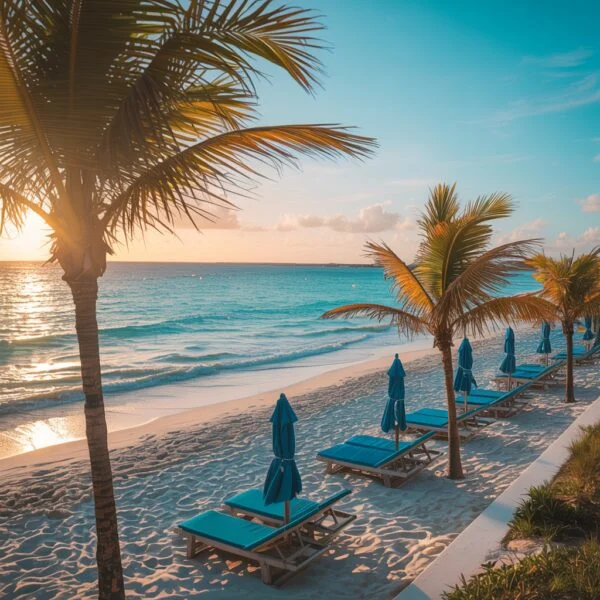
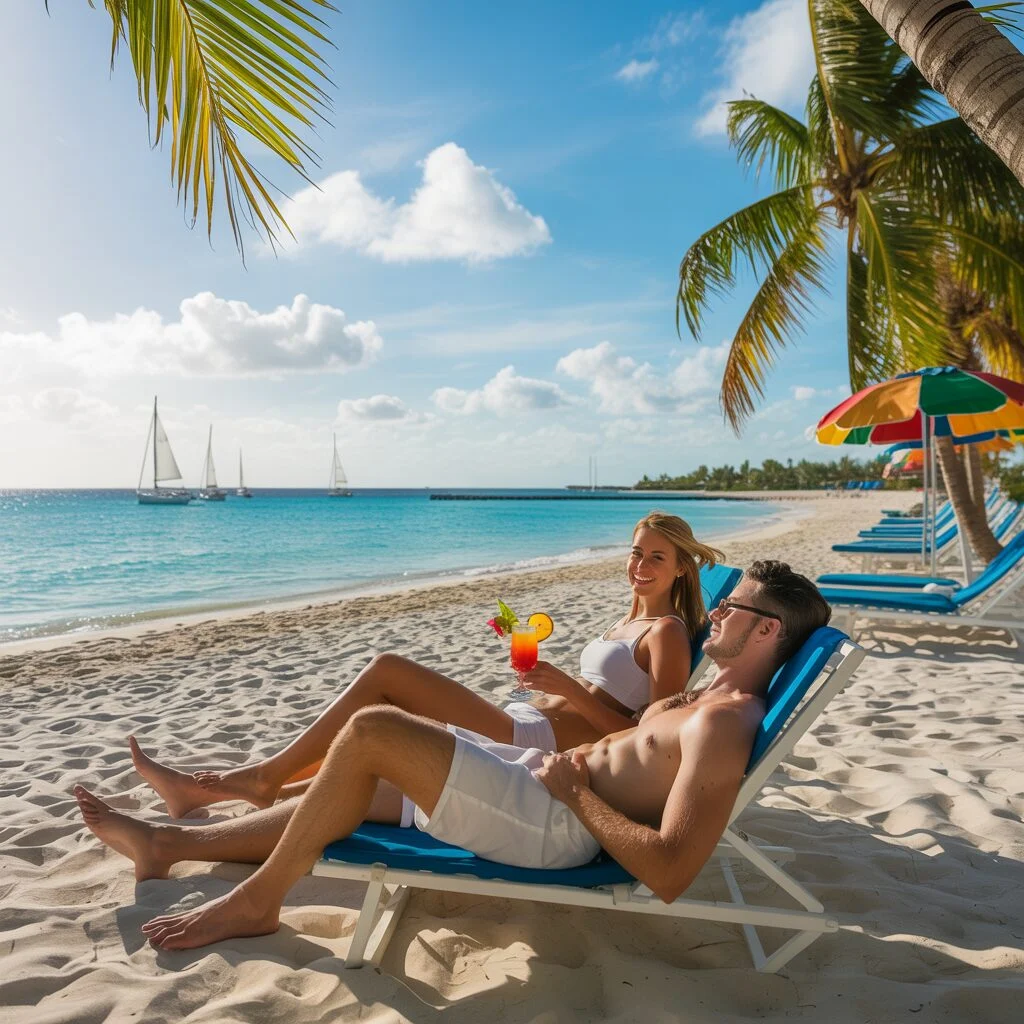
I’ll guide you through Aruba’s neighborhoods to help you find your perfect home base. First-timers should stay in Palm Beach (high-rise district) for convenience and nightlife, or Eagle Beach (low-rise district) for tranquility and wider beaches—both are within 2 miles of each other on the western coast. Palm Beach offers 20+ resorts within walking distance of restaurants and casinos, while Eagle Beach provides 3x more beach space per visitor. Book 3-6 months ahead for January-March peak season to secure rates 30-50% lower than last-minute bookings.
What Are the Best Areas to Stay in Aruba?
Aruba’s western coast contains 5 distinct accommodation zones, each within 15 miles of the airport. 85% of first-time visitors choose Palm Beach or Eagle Beach for direct beach access and developed infrastructure.
Palm Beach: The High-Rise Hotel District
Palm Beach is the High-Rise Hotel District, a 2-mile strip with 15+ multi-story resorts opening directly onto white sand beaches. A paved beachfront path connects all hotels, beach bars, and 2 shopping malls (Paseo Herencia and Palm Beach Plaza) within 0.5-1 mile walking distance.
You can access water sports operators, 30+ restaurants, and 8 casinos without a car. The beach averages 50 feet wide with calm waters year-round, protected by the island’s western position.
Eagle Beach: The Low-Rise Hotel District
Eagle Beach sits 1 mile south of Palm Beach and features a 150-foot-wide beach (3x wider than Palm Beach). Buildings are restricted to 4 stories maximum, creating an open skyline with 12 boutique hotels and small resorts across the street from the beach.
The area has 60% fewer visitors per square foot than Palm Beach. The iconic Fofoti trees are located at the southern end. Restaurants are 0.3-0.5 miles apart, requiring short walks or taxis between dining options.
Oranjestad: Staying in the Capital City
Oranjestad, 3 miles from the airport, combines Dutch colonial architecture with the cruise ship terminal and Renaissance Marketplace. The city receives 2-4 cruise ships daily during peak season (December-April), creating daytime crowds of 5,000-8,000 visitors.
Staying here provides access to Renaissance Private Island (exclusive to Renaissance Wind Creek guests), home to 6-8 flamingos. The downtown area has 40+ duty-free shops and Fort Zoutman, built in 1798.
Noord: A Quiet Alternative Near the Action
Noord is the inland district 0.5-1 mile behind Palm Beach, offering vacation rentals, villas, and apartments at 20-40% lower rates than beachfront hotels. Properties provide 2-4 bedrooms with full kitchens and private pools.
A rental car ($35-50/day) is essential—beaches are 5-10 minutes away by car. The residential neighborhood has 3 supermarkets within 1 mile and is safe for evening walks.
Savaneta and San Nicolas: The Local Experience
Savaneta (12 miles south) and San Nicolas (15 miles southeast) offer authentic experiences away from resort zones. Savaneta has 8 fresh seafood restaurants along the fishing pier. San Nicolas features 50+ street art murals across a 6-block area.
Accommodation consists of 10-15 small guesthouses and oceanfront bungalows at $80-150/night. Baby Beach is 2 miles from San Nicolas. A car is mandatory—public buses run only 2-3 times daily.
Palm Beach vs. Eagle Beach: Which Is Better for First-Timers?
Palm Beach offers convenience and energy within a 0.5-mile radius, while Eagle Beach provides 3x more beach space and 60% fewer crowds. Your choice depends on whether you prioritize walkability or tranquility.
| Feature | Palm Beach (High-Rise) | Eagle Beach (Low-Rise) |
|---|---|---|
| Vibe | Energetic, social, and busy | Quiet, romantic, and laid-back |
| Beach | 50 feet wide, 200+ loungers | 150 feet wide, 50-80 loungers |
| Walkability | 30+ venues within 0.5 miles | 8-10 venues within 0.5 miles |
| Nightlife | 8 casinos, 12+ bars/clubs | 3-4 hotel bars only |
| Water Sports | 15+ operators on beach | 2-3 operators (motorized sports restricted) |
What Types of Accommodation Are Available in Aruba?
Aruba offers 3 main lodging categories: all-inclusive resorts (8 properties), vacation rentals (500+ listings), and boutique hotels (20+ properties). Each serves different budgets and travel styles.
Benefits of Staying in All-Inclusive Resorts
All-inclusive resorts in Palm Beach and Eagle Beach (8 total properties) include all meals, drinks, and non-motorized water sports in rates of $300-600/night for 2 people. This eliminates 80% of daily spending decisions and covers $100-150/day in food and beverage costs.
However, Aruba has 200+ restaurants island-wide. All-inclusive guests miss dining at top-rated local spots. 65% of visitors choose European Plan (room only) or breakfast-only rates at $150-400/night to explore the culinary scene.
Why Choose Vacation Rentals in Aruba?
Vacation rentals in Noord and Malmok (500+ listings on Airbnb/VRBO) offer full kitchens, private pools, and 2-4 bedrooms at $150-350/night. For groups of 4-6, this costs 40-60% less per person than hotel rooms.
Rentals lack daily housekeeping and concierge services. You’ll need a rental car ($35-50/day) to reach beaches 5-10 minutes away. Cooking 5-7 meals per week saves $200-400 on dining costs.
Boutique Hotels and Eco-Lodges
Boutique hotels (20+ properties with under 50 rooms) in Eagle Beach and Oranjestad charge $180-350/night and focus on unique design and personalized service. Staff-to-guest ratios are 1:3 versus 1:8 at large resorts.
Eco-lodges near Arikok National Park (3 properties) cost $120-200/night and emphasize sustainability. They’re located 8-12 miles from beaches, ideal for visitors prioritizing hiking over beach time.
Where to Stay in Aruba Based on Traveler Type
Your travel companion determines optimal location. Families need walkability and kid-friendly amenities, couples prioritize privacy, and solo travelers seek social environments.
Best Aruba Accommodation for Families
Families with children choose Palm Beach for 15+ resorts with kids’ clubs (ages 4-12), pool complexes with 2-4 pools, and calm waters averaging 3-5 feet deep within 50 feet of shore. Walking to 30+ restaurants eliminates car seat logistics.
Vacation rentals in Noord cost 40-60% less for families of 4-6. Private pools and full kitchens reduce dining costs by $200-400/week. You’ll need a car ($35-50/day) for 5-10 minute beach trips.
Top Areas for Couples and Honeymooners
Eagle Beach attracts 70% of honeymooners with 150-foot-wide beaches providing 3x more space per visitor than Palm Beach. 8 of 12 hotels are adults-only (18+), eliminating pool noise and creating serene environments.
Adults-only resorts in Palm Beach and Eagle Beach (6 properties) offer swim-up suites ($350-600/night), couples’ massages ($200-300), and private beach dinners ($150-250). Sunset views occur at 6:30-7:30 PM year-round.
Best Options for Solo Travelers and Digital Nomads
Solo travelers choose Palm Beach for social beach bars with 5-8 PM happy hours and safe nighttime walking within the 2-mile strip. Meeting fellow travelers happens naturally at 12+ beach bars and hotel pools.
Oranjestad serves digital nomads with 5 cafes offering reliable Wi-Fi (25+ Mbps) and co-working spaces ($15-25/day). Public buses (Arubus) run every 15-30 minutes to beaches, eliminating solo car rental costs of $35-50/day.
Where to Stay for Nightlife and Entertainment
Palm Beach is the only nightlife hub with 8 casinos (open until 2-4 AM), 12+ beach bars with live music (6-11 PM), and 4 nightclubs at Paseo Herencia (10 PM-3 AM). All venues are within 0.5-1 mile walking distance.
Oranjestad has 3-4 bars near Renaissance Marketplace, closing by midnight. Staying in Palm Beach eliminates $15-25 taxi costs for late-night returns.
Essential Tips for First-Time Visitors to Aruba
Logistics around money, timing, and safety impact your stay quality. Aruba costs 20-30% more than average Caribbean destinations but offers year-round sunshine and safety.
How to Budget for Your Aruba Stay
Aruba is a premium destination with peak season (mid-December to mid-April) rates of $250-600/night. Low season (May-November) drops rates 30-50% to $150-350/night with identical weather (80-90°F year-round, 20 inches annual rainfall).
Hotels add 15% service charge plus 9.5% government tax (24.5% total) to base rates. Dining costs $25-50 per person for dinner. Booking rooms with kitchenettes saves $200-400/week on meals for families.
When Is the Best Time to Visit and Book?
Aruba sits outside the hurricane belt (12 degrees south), receiving sunshine 300+ days/year with temperatures of 80-90°F. Peak season (January-March) offers perfect weather but requires booking 3-6 months ahead for best rates and availability.
Carnival season (January-February) needs 12-month advance booking. Low season (May-November) has identical weather with 30-50% lower rates and same-week booking availability.
How to Navigate Transportation in Aruba
Taxis operate on fixed government rates of $25-35 from airport to Palm Beach, $20-30 to Eagle Beach, and $15-20 to Oranjestad. Confirm prices before entering—meters aren’t used.
Arubus public buses run every 15-30 minutes between Oranjestad and hotel districts for $2.60 one-way. Exploring Arikok National Park, the north coast, or Baby Beach requires car rental ($35-50/day) or Jeep rental ($60-80/day) for rough terrain.
Is It Safe to Stay in Aruba?
Aruba ranks as the safest Caribbean island with violent crime rates 90% below regional average. Palm Beach, Eagle Beach, and Oranjestad are safe for solo nighttime walking. Locals speak 4 languages (Papiamento, Dutch, English, Spanish) and prioritize tourist safety.
Use hotel safes for passports and cash. The main safety risk is UV exposure—trade winds mask sun intensity, causing burns in 30-45 minutes without SPF 30+ sunscreen.
What Are the Must-Know Local Customs?
Aruba’s motto is “One Happy Island.” English is spoken by 90% of residents alongside Dutch, Spanish, and Papiamento (local language). Learning “Bon Bini” (Welcome) and “Danki” (Thank you) enhances local interactions.
Use reef-safe sunscreen (oxybenzone-free) to protect coral reefs—regular sunscreen is banned at marine parks. Aruba banned single-use plastics in 2019. Tap water is distilled seawater and safe to drink, saving $3-5/day on bottled water.